
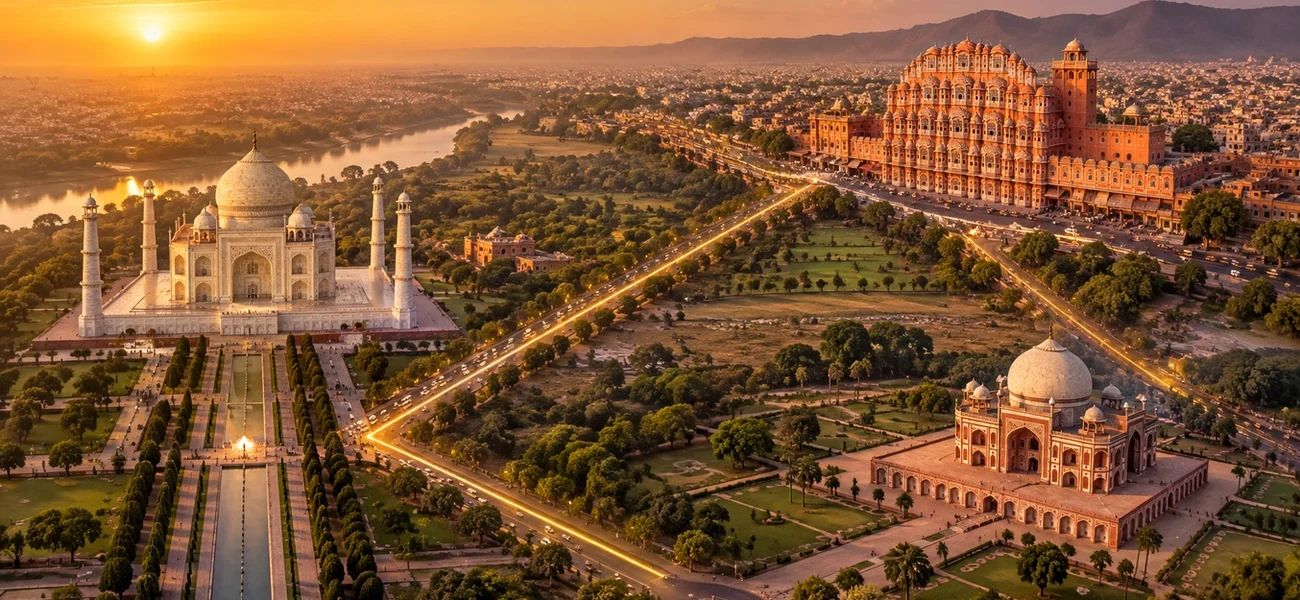
A luxury Golden Triangle tour from the UK to India is an excellent way to experience some of the country’s most famous cities without trying to see too much in one trip. The classic route connects Delhi, Agra and Jaipur, bringing together Mughal architecture, royal palaces, colourful markets, traditional cuisine and India’s rich cultural heritage.
For travellers planning a tour from the UK to India, the Golden Triangle is particularly appealing because the three destinations can be combined into a relatively straightforward itinerary. You can begin in Delhi, travel to Agra to see the Taj Mahal, and finish in Jaipur surrounded by the palaces and forts of Rajasthan.
This guide explains how to plan a luxury Golden Triangle holiday from the UK, how many days to allow, what to see in each city, when to visit, where to stay and what British travellers should know before departing.
What Is the Golden Triangle Tour in India?
The India Golden Triangle is a popular travel route linking Delhi, Agra and Jaipur.
Delhi is usually the starting point for international visitors. Agra follows, with the Taj Mahal as its headline attraction, before the journey continues to Jaipur, the capital of Rajasthan and famously known as the Pink City.
The route works particularly well for first-time visitors because each destination offers a distinctly different experience.
Delhi introduces you to India’s political history, Mughal heritage and modern city life.
Agra is home to the Taj Mahal and several important Mughal monuments.
Jaipur introduces you to Rajasthan’s royal history, colourful bazaars, magnificent forts and traditional crafts.
Rather than spending your entire holiday travelling long distances, you can experience three major destinations within one carefully planned itinerary.
Why Is It Called the Golden Triangle?
The name comes from the triangular route formed by Delhi, Agra and Jaipur when the three cities are plotted on a map.
The word “golden” reflects the concentration of historical and cultural attractions along the route. Delhi and Agra are strongly associated with the Mughal period, while Jaipur showcases the royal heritage of Rajasthan.
For someone taking a tour from the UK to India for the first time, this combination provides a broad introduction to northern India’s history and culture.
Why Choose the Golden Triangle for Your First India Trip?
The route offers a practical balance between sightseeing and travel.
You can visit major monuments, explore local markets, enjoy regional food and stay in luxury hotels without constantly changing regions.
Other advantages include:
- Well-established tourism infrastructure
- A wide choice of luxury hotels
- Private chauffeur-driven travel
- Major international and domestic transport connections
- Some of India’s most famous historical attractions
- Opportunities for authentic cultural experiences
- Easy options for extending the trip into Rajasthan or wildlife destinations
A luxury itinerary can also be customised around your interests, whether you prefer heritage, food, shopping, photography, wellness or relaxed sightseeing.
How Many Days Do You Need for a Luxury Golden Triangle Tour?
For most UK travellers, five to seven days provides a comfortable introduction to Delhi, Agra and Jaipur.
A five-day itinerary works for travellers with limited annual leave who want to concentrate on the major attractions.
A six-day itinerary gives you more time to explore beyond the main monuments.
Seven days allows for a slower pace, longer meals, shopping, cultural experiences and time to enjoy your luxury hotels rather than treating them simply as places to sleep.
A Suggested Seven-Day Itinerary
Day 1 – Arrive in Delhi
Arrive from the UK and transfer to your luxury hotel. Keep the first day relatively relaxed after your international journey.
Day 2 – Explore Delhi
Visit Old Delhi and New Delhi, including important Mughal monuments, India Gate and other significant landmarks.
Day 3 – Delhi to Agra
Travel from Delhi to Agra by private car or train. Visit Agra Fort and enjoy a relaxed evening at your luxury hotel.
Day 4 – Taj Mahal and Agra to Jaipur
Visit the Taj Mahal in the morning before continuing towards Jaipur. Depending on your schedule, you can stop at Fatehpur Sikri along the way.
Day 5 – Explore Jaipur
Visit Amber Fort, the City Palace and Hawa Mahal before exploring Jaipur’s historic streets.
Day 6 – Jaipur Experiences
Spend more time discovering local markets, traditional crafts, food and Rajasthan’s cultural heritage.
Day 7 – Departure or Extend Your Journey
Return towards Delhi for your flight home, or extend your holiday with destinations such as Ranthambore, Udaipur or Jodhpur.
Delhi: The Gateway to Your India Adventure
For many people taking a tour from the UK to India, Delhi is their first experience of the country.
The capital combines centuries of history with a modern metropolitan atmosphere. Old Delhi and New Delhi offer particularly different experiences, making it worth allowing at least two nights if your itinerary permits.
Exploring Old Delhi
Old Delhi is where you can experience some of the city’s most important Mughal heritage.
The Jama Masjid is one of the most significant mosques in the city. Its red sandstone and marble architecture reflects the grandeur associated with the Mughal period.
Nearby, the Red Fort provides another important insight into Delhi’s imperial history.
The enormous red sandstone complex was commissioned by Shah Jahan, the Mughal emperor who also commissioned the Taj Mahal.
Take time to explore the fort’s courtyards, halls and gardens rather than simply stopping for a photograph outside.
Old Delhi also provides an opportunity to experience the city’s food culture and traditional markets.
A private guided walk can make the area easier to understand, particularly if this is your first visit to India.
Discovering New Delhi
New Delhi presents a very different side of the capital.
Wide avenues, government buildings and grand landmarks reflect the city’s development during the British colonial period.
India Gate is one of the most recognisable landmarks, while the area around Kartavya Path provides a striking contrast to the narrow streets of Old Delhi.
You can also explore museums, galleries, gardens and contemporary restaurants during your time in the capital.
Where to Stay in Delhi
Luxury travellers have a wide choice of five-star hotels in Delhi.
When selecting your accommodation, consider its location as well as the facilities.
A centrally located hotel can make sightseeing easier, while a property closer to the airport may be convenient at the beginning or end of your journey.
For a luxury Golden Triangle tour from the UK, look for properties offering:
- Spacious rooms and suites
- Restaurants serving Indian and international cuisine
- Spa facilities
- Concierge services
- Private airport transfers
- Easy access to major attractions
Agra: Home of the Taj Mahal
Agra is the second major stop on the Golden Triangle route.
Although the city has several important historical attractions, the Taj Mahal remains the reason most international visitors come to Agra.
For many UK travellers, seeing the Taj Mahal in person is one of the highlights of their first tour from the UK to India.
Visiting the Taj Mahal
The Taj Mahal was commissioned by Mughal emperor Shah Jahan in memory of his wife Mumtaz Mahal.
The white marble monument is known for its symmetrical architecture, intricate decoration and gardens.
Your guide can explain the history behind the monument, the symbolism within the complex and the story of its construction.
Early morning visits can be particularly rewarding because the atmosphere and light change throughout the morning.
Before travelling, check the current opening days, ticket arrangements and visitor regulations, as these can change.
Agra Fort
Don’t leave Agra immediately after visiting the Taj Mahal.
Agra Fort provides another important perspective on Mughal history.
The enormous red sandstone complex contains palaces, courtyards, audience halls and other structures built and developed by successive Mughal rulers.
One of the most memorable viewpoints is from the area associated with Shah Jahan’s final years, where the Taj Mahal can be seen across the Yamuna River.
Fatehpur Sikri
If your itinerary allows, consider stopping at Fatehpur Sikri while travelling between Agra and Jaipur.
The former Mughal capital contains impressive red sandstone architecture and provides another insight into the reign of Emperor Akbar.
A knowledgeable guide can help explain why the city was established and how it fitted into the history of the Mughal Empire.
Luxury Hotels in Agra
A luxury stay in Agra can make the Taj Mahal experience considerably more relaxing.
Some hotels are particularly attractive because of their proximity to the monument or views towards it.
When choosing your hotel, consider:
- Distance from the Taj Mahal
- Views
- Dining options
- Spa facilities
- Private transfers
- Guided sightseeing
- Evening experiences
For a luxury trip, the hotel itself can become part of the experience rather than simply an overnight stop.
Jaipur: Discover India’s Royal Rajasthan
Jaipur completes the traditional Golden Triangle route.
The capital of Rajasthan is known for its pink-coloured historic centre, royal palaces, impressive forts and traditional handicrafts.
After the Mughal heritage of Delhi and Agra, Jaipur introduces you to a distinctly Rajasthani side of India.
City Palace
The City Palace remains one of Jaipur’s most important attractions.
The complex combines courtyards, gateways, palace buildings and museum collections.
A guided visit allows you to understand how Jaipur’s royal family shaped the city and how the palace functioned as a centre of administration and culture.
Hawa Mahal
The Hawa Mahal, or Palace of Winds, is one of Jaipur’s most recognisable buildings.
Its distinctive façade contains hundreds of small windows designed to allow air to circulate through the building.
The structure is particularly impressive when viewed from the street outside.
Don’t simply take a photograph and move on. Your guide can explain the building’s connection with royal life and the social customs of the period.
Amber Fort
Located outside the main city, Amber Fort is one of the essential stops on a Jaipur itinerary.
The hilltop complex combines defensive architecture with ornate courtyards, decorative interiors and panoramic views.
Allow enough time for the visit rather than treating it as a quick photo stop.
Nahargarh Fort
For another perspective of Jaipur, visit Nahargarh Fort in the Aravalli Hills.
The fort provides extensive views across the city and can work particularly well later in the day.
It is also a useful addition for travellers who want to spend more time exploring Jaipur beyond its most famous attractions.
Experience Jaipur’s Markets and Local Culture
A luxury tour from the UK to India doesn’t have to mean spending your entire holiday inside five-star hotels and visiting only major monuments.
Some of the most memorable experiences come from seeing how local traditions continue today.
Johari Bazaar
Johari Bazaar is known for jewellery, gemstones and traditional crafts.
If you’re interested in purchasing jewellery or gemstones, use an established and reputable retailer and understand exactly what you’re buying before making a purchase.
Bapu Bazaar
Bapu Bazaar is known for textiles, traditional clothing, handicrafts and colourful products associated with Rajasthan.
Shopping with a knowledgeable local guide can help you understand the differences between handmade and mass-produced products.
Indian Food in Jaipur
Jaipur is also a good place to explore Rajasthani cuisine.
Try regional dishes alongside familiar Indian favourites, and ask your guide or hotel restaurant about local specialities.
For UK travellers who have mainly experienced Indian food through British Indian restaurants, regional cuisine in India can be a very different experience.
Planning Your Luxury Tour from the UK to India
Planning your trip carefully can make the difference between a rushed sightseeing holiday and a relaxed luxury experience.
When Is the Best Time to Visit?
The cooler months from October to March are generally popular for visiting Delhi, Agra and Jaipur.
Daytime conditions are often more comfortable for sightseeing than during the hottest part of the year.
December and January can bring cooler mornings and, in some areas, fog. The northern Indian weather can vary considerably from day to day.
The warmer months can be challenging for extended sightseeing, particularly around midday.
The monsoon season can also affect travel conditions.
Before booking your flights, check the expected conditions for each destination rather than assuming that India’s weather is the same throughout the country.
Flights from the UK to India
A tour from the UK to India will usually begin with an international flight to a major Indian gateway such as Delhi or another suitable city depending on your itinerary.
Travellers can depart from several UK airports, depending on available routes and connections.
London offers the widest range of international connections, while travellers from other parts of the UK may find connecting flights more convenient.
When comparing flights, consider more than the ticket price.
Look at:
- Total journey time
- Number of connections
- Baggage allowance
- Arrival time in India
- Airport transfers
- Connection duration
- Your onward itinerary
Arriving at a convenient time can make your first day considerably more comfortable.
Visa and Travel Documents
UK citizens should check the latest Indian entry and visa requirements before booking their trip.
Passport validity requirements, visa procedures and entry rules can change, so always verify the current requirements through the appropriate official sources before departure.
Travel insurance is also an important part of planning an international holiday.
Keep digital and physical copies of important travel documents, including your passport, visa information, insurance details and emergency contacts.
Money and Payments
India uses the Indian rupee (₹).
For UK travellers, it is useful to understand both the local price in rupees and its approximate value in pounds when budgeting.
Cards are widely accepted at many hotels, restaurants and established businesses, but carrying some cash remains useful for smaller purchases, local markets and certain transport situations.
Your UK bank may also charge foreign transaction or cash withdrawal fees, so check your card terms before travelling.
What Should UK Travellers Pack?
Your packing list should reflect both the weather and local customs.
Useful items include:
- Lightweight clothing
- Comfortable walking shoes
- A light scarf or shawl
- Sun protection
- Sunglasses
- Personal medication
- A universal travel adaptor
- Reusable water bottle
- Portable phone charger
- Small day bag
For temples, mosques and other religious sites, modest clothing that covers the shoulders and knees is often appropriate.
A scarf or shawl can be particularly useful because it takes up very little space in your luggage.
Private Luxury Tour or Group Golden Triangle Tour?
For travellers seeking a luxury experience, a private itinerary provides greater flexibility.
You can choose your sightseeing times, spend longer at places that interest you and adjust the schedule around your preferences.
Private tours commonly include a dedicated vehicle and driver, with local guides arranged for sightseeing.
This can be particularly useful for couples, families, honeymooners and travellers who prefer a slower pace.
Group tours generally operate according to a fixed itinerary and shared transport.
They can provide a social experience and may have a lower overall cost, but the schedule is less flexible.
The right option depends on your preferred travel style, budget and the amount of control you want over your itinerary.
Can You Add Ranthambore to Your Golden Triangle Tour?
Yes, Ranthambore can be added if you have additional time.
Ranthambore National Park is known for its wildlife and opportunities to see Bengal tigers in their natural habitat.
Adding Ranthambore changes the character of your trip.
Instead of focusing entirely on architecture, history and city experiences, you introduce wildlife and outdoor activities.
Allow additional nights rather than trying to squeeze a wildlife experience into an already busy five-day itinerary.
For UK travellers with around nine to eleven days available, a combination of Delhi, Agra, Jaipur and Ranthambore can create a more varied introduction to northern India.
Can You Add Udaipur to Your Golden Triangle Tour?
Yes, Udaipur can be added to your Golden Triangle Tour if you have additional time.
Udaipur is known for its beautiful lakes, historic palaces, romantic atmosphere and traditional Rajasthani culture. It offers a different experience from Delhi, Agra and Jaipur, with a stronger focus on lakeside views, heritage stays and relaxed city experiences.
Adding Udaipur changes the pace of your trip. Instead of focusing mainly on historical monuments and busy city sightseeing, you can enjoy scenic boat rides, explore grand palaces and discover the charm of Rajasthan at a more leisurely pace.
Allow two to three additional nights to explore Udaipur comfortably rather than squeezing it into an already busy itinerary.
For UK travellers with around nine to eleven days available, combining Delhi, Agra, Jaipur and Udaipur can create a memorable introduction to northern India, blending iconic landmarks with royal heritage and lakeside experiences.
How to Make Your Luxury Golden Triangle Holiday More Authentic
Luxury travel doesn’t mean you have to limit your experience to luxury hotels and famous monuments.
Ask your travel specialist to include experiences that allow you to understand everyday India.
Depending on your interests, you might include:
- A guided Old Delhi food walk
- A private cooking experience
- A local artisan workshop
- A heritage walk
- Traditional Indian music or dance
- A private dining experience
- A village visit
- A guided market tour
- A yoga or wellness session
- A hands-on craft experience
The key is to choose experiences that have a genuine connection to the destination.
Rather than rushing between attractions, allow time to talk to your guide, understand the history and experience each place at a comfortable pace.
Why Choose a Luxury Golden Triangle Tour from the UK to India?
A well-planned luxury Golden Triangle tour from the UK to India gives first-time visitors a manageable introduction to several sides of the country.
Delhi introduces you to India’s capital and Mughal heritage.
Agra brings you face-to-face with the Taj Mahal and the history of the Mughal Empire.
Jaipur introduces you to Rajasthan’s royal traditions, forts, palaces, markets and cuisine.
With five to seven days, you can experience the highlights. With additional time, you can slow down and add wildlife, food, wellness or other destinations.
For UK travellers, the most important part of planning is choosing an itinerary that matches the time you have available rather than trying to fit every attraction into one holiday.
A carefully planned tour from the UK to India should give you enough time to explore, rest and enjoy the journey.
Frequently Asked Questions
How many days do I need for a Golden Triangle tour from the UK to India?
Five to seven days is a practical starting point for Delhi, Agra and Jaipur. Five days focuses on the major sights, while six or seven days allows more time for markets, food, cultural experiences and relaxed sightseeing.
Is the Golden Triangle suitable for first-time UK travellers to India?
Yes, the route offers a straightforward introduction to northern India. Delhi, Agra and Jaipur have extensive tourism infrastructure, established hotels, experienced guides and several transport options.
What is the best time for a tour from the UK to India?
October to March is generally popular for visiting the Golden Triangle because temperatures are more comfortable for sightseeing. Conditions can vary between cities and months, so check the expected weather before booking.
How much does a luxury Golden Triangle tour from the UK to India cost?
The cost depends on your flights, hotel category, room type, private transport, guides, activities and length of stay. A luxury itinerary will naturally cost more than a standard group tour. Ask for a detailed quotation that separates international flights, accommodation, transport and experiences.
Should I choose a private or group Golden Triangle tour from the UK to India?
A private tour provides more flexibility, dedicated transport and greater control over your schedule. A group tour normally follows a fixed itinerary with shared transport. Your choice depends on your budget and preferred travel style.
What should I wear in India?
Lightweight, comfortable clothing works well in warmer weather. When visiting religious sites, choose clothing that covers your shoulders and knees. A lightweight scarf or shawl is useful to keep in your day bag.
Do UK travellers need a visa for India?
UK citizens should check the latest Indian visa and entry requirements before travelling. Requirements can change, so confirm the current rules through the official Indian immigration or visa service before departure.
Can I add Ranthambore to my Golden Triangle itinerary?
Yes. Ranthambore can be added if you have enough time for additional nights and wildlife activities. It is particularly suitable for travellers who want to combine India’s historic monuments with a wildlife experience.
What currency is used in India?
India uses the Indian rupee (₹). UK travellers-driven travel is a popular option for luxury itineraries because it provides flexibility and door-to-door convenience. Trains can also be useful on streets of Delhi and the Taj Mahal in Agra to Jaipur’s royal palaces and colourful bazaars, each destination. A five-to-seven-day itinerary provides a strong introduction, while extending the journey to include Ranthambore or another should carry some local currency for smaller purchases while using cards where they are accepted.
What is the easiest way to travel between Delhi, Agra and Jaipur?
Private chauffeur-driven travel is a popular option for luxury itineraries because it provides flexibility and door-to-door convenience. Trains can also be useful on selected routes. Your travel planner can recommend the most practical option based on your itinerary and hotel locations.
Final takeaway
A luxury Golden Triangle tour from the UK to India combines some of India’s most recognisable sights with a manageable itinerary for first-time visitors.
From the historic streets of Delhi and the Taj Mahal in Agra to Jaipur’s royal palaces and colourful bazaars, each destination adds something different to the journey.
For UK travellers, allowing enough time is more important than trying to see everything. A five-to-seven-day itinerary provides a strong introduction, while extending the journey to include Ranthambore or another Rajasthan destination gives you more opportunities to experience India beyond its most famous monuments.
With the right combination of luxury accommodation, private transport, knowledgeable local guides and authentic experiences, your tour from the UK to India can be comfortable while still giving you a genuine sense of the country’s history, culture and everyday life.